Clinical science is beginning to bridge the gap between regenerative theory and functional outcomes in aging. As a longevity physician practicing in Miami, I follow this research closely because what happens in clinical trials today shapes what becomes available to patients tomorrow. The question of whether stem cells slow aging is one I am asked regularly in my Miami practice. Recent studies using mesenchymal stem cells (MSCs) show real promise in slowing, and in some cases measurably improving, the physical decline associated with age-related frailty. The findings are not hype. They are peer-reviewed, published data and they deserve a clear-eyed review
What Is Frailty and Why Do Stem Cells Slow Aging Matter for Longevity?
Frailty is not simply being old. It is a clinical syndrome defined by measurable declines in strength, endurance, physical function, and physiological reserve. Frail individuals have a reduced capacity to respond to stressors whether physical, metabolic, or immune and are at significantly increased risk of falls, disability, hospitalization, and death.
Notably, what makes frailty particularly relevant to longevity medicine is that it is not inevitable. It is a biological state driven by specific, identifiable mechanisms. Chief among them are chronic inflammation, immunosenescence, and the progressive depletion of the body’s own stem cell population. Importantly, stem cell exhaustion is one of the hallmark mechanisms of biological aging. As the body’s reservoir of regenerative cells declines in number and function, the capacity for tissue repair diminishes. The result is the progressive functional decline we recognize as frailty.
If stem cell exhaustion contributes to frailty, the logical clinical question becomes: can replenishing or supporting that stem cell population reverse or slow it?
Recent clinical trials have begun to answer that question directly — and the evidence that stem cells slow aging at a functional, measurable level is growing.

The Clinical Evidence — What the Trials Show
Lomecel-B: Allogeneic MSC Therapy for Aging Frailty
The most advanced clinical data comes from trials evaluating Lomecel-B, a bone marrow-derived allogeneic mesenchymal stem cell therapy developed by Longeveron in collaboration with the University of Miami Miller School of Medicine.
In a phase IIb randomized, double-blind, placebo-controlled clinical trial, older adults with aging frailty received single intravenous infusions of MSCs at varying doses up to 200 million cells. At the six-month mark, the results were clinically meaningful:
• Participants in the highest dose group increased their six-minute walk distance by 41 to 63 meters, exceeding the minimum clinically important difference for this measure
• Significant improvements were observed in inflammatory biomarkers including CRP and IL-6
• Improvements in handgrip strength and patient-reported outcomes were documented
• The therapy was safe and well tolerated with no serious adverse events reported
Consequently, these are not marginal findings. A 41 to 63 meter improvement in six-minute walk distance in frail older adults represents a meaningful functional change that affects independence, fall risk, and quality of life.
A broader review published in Frontiers in Aging assessed 11 clinical trials investigating stem cell therapies for anti-aging applications and confirmed that MSCs were the predominant cell type used across 81.8 percent of those trials, with frailty emerging as one of the most clinically advanced targets in regenerative research.
What MSCs Are Actually Doing
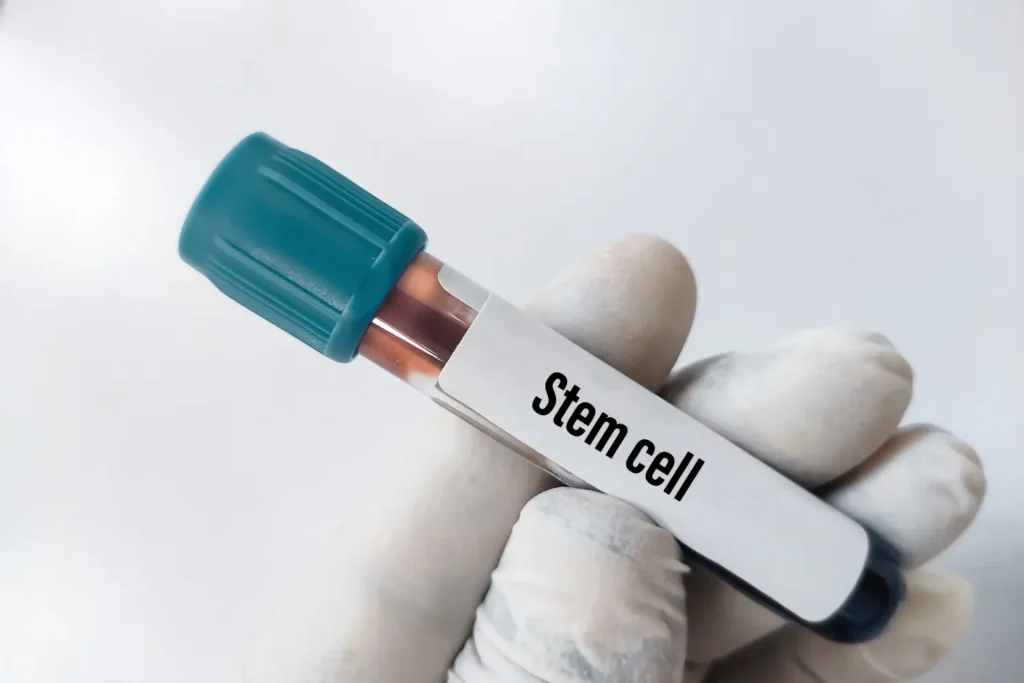
Mesenchymal stem cells do not simply replace damaged cells. In fact, their therapeutic effect is primarily paracrine, meaning they act by releasing signaling molecules, growth factors, and immune modulators that influence the surrounding tissue environment.
In the context of aging and frailty, MSCs appear to support several biological processes:
• Reducing systemic inflammation, a key driver of biological aging and frailty
• Modulating immune function by addressing the immunosenescence that accumulates with age• Supporting tissue repair signaling and stimulating the body’s endogenous regenerative capacity
• Improving cardiovascular and metabolic function, reflected in the walking distance improvements observed in trials
This is not a single mechanism. It is a coordinated biological response — one that helps explain why stem cells slow aging not through a single pathway but by addressing multiple root drivers of functional decline simultaneously.”
What These Trials Do Not Yet Tell Us
As a physician I believe the limitations of this research are as important as the findings. Patients deserve a complete picture.
Current data comes from phase I and phase II trials — early-stage studies designed to assess safety and preliminary efficacy, not to establish definitive treatment protocols. Larger phase III trials are needed before MSC therapy for frailty can be considered standard of care.
Lomecel-B uses donor-derived stem cells, which carries regulatory and immunological implications that differ from autologous approaches. At NeoMedicine Institute, stem cell therapy uses only the patient’s own cells collected from peripheral blood, bone marrow, or adipose tissue. Autologous approaches carry a different regulatory framework and risk profile than donor-derived therapies.
Long-term efficacy data also remains limited. Six-month outcomes from current trials are promising, but what happens at 12, 24, or 36 months requires further study.
Nevertheless, these limitations do not diminish the significance of what has been observed. They contextualize it appropriately.
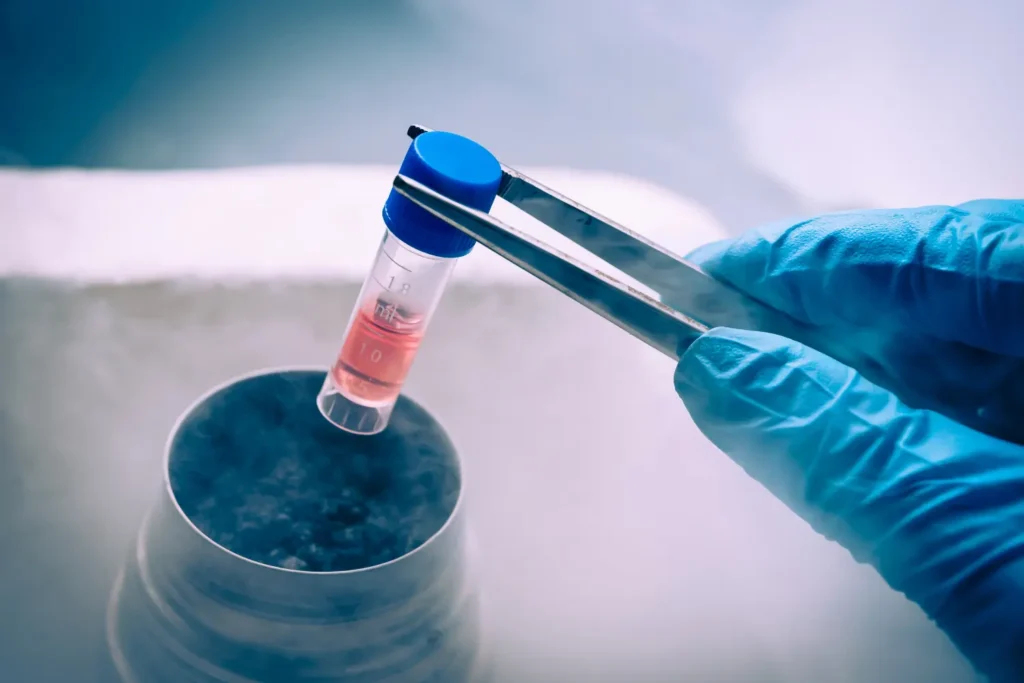
What This Means for Stem Cell Banking
The frailty trials raise a question I am frequently asked by patients at NeoMedicine Institute in Miami: if stem cell therapy shows promise for age-related decline, when is the right time to act?
My answer has not changed. The best time to bank stem cells is now.
The cells available to you today from your own peripheral blood, bone marrow, or adipose tissue are biologically younger than any cells you could collect in five or ten years. Over time, stem cell quality and quantity both decline. Furthermore, the same biological aging process that contributes to frailty also degrades the regenerative potential of the cells themselves.
The frailty trials use allogeneic cells, specifically young donor-derived MSCs, because younger cells appear to carry stronger regenerative signaling capacity. Banking autologous stem cells now preserves that same biological advantage for your own future use, on your own biological terms.
This is not a theoretical argument. It is a clinical one grounded in the same biology the frailty trials are measuring.
Learn more about stem cell banking
Stem Cell Banking for Sports Injuries
Can Stem Cells Slow Aging? The Longevity Medicine Perspective
Stem cell therapy is not a standalone intervention. Its value in a longevity medicine framework comes from how it integrates with the other biological systems we monitor and support including hormones, inflammation, cardiovascular fitness, metabolic function, and cellular aging markers.
The clinical case that stem cells slow aging is no longer theoretical — it is supported by peer-reviewed trial data. At NeoMedicine Institute in Miami, frailty prevention is not a single treatment decision. It is a longitudinal strategy built around measurable biomarkers, physician-guided interventions, and the understanding that biological aging is not fixed. It is modifiable.
These trials confirm what longevity medicine has long proposed: the body’s regenerative capacity responds to targeted clinical intervention. The goal is not to wait for decline and respond to it. Instead, the aim is to identify and address the biological drivers of that decline before they compound.
Stem cell therapy as part of a coordinated longevity plan may become one of the most meaningful tools in that effort. The clinical evidence is building. Biology is clear on this point. For patients, the question is not whether to act. The question is when.
Frequently Asked Questions: Stem Cells and Aging
Clinical research suggests that mesenchymal stem cell therapy may slow certain measurable markers of biological aging, particularly in the context of frailty. Phase II clinical trials have shown improvements in physical function, inflammatory biomarkers, and strength in older adults with aging frailty following MSC infusions. These findings are promising but represent early-stage evidence and larger trials are ongoing.
Frailty is a clinical syndrome characterized by declines in strength, endurance, physical function, and physiological reserve associated with increased vulnerability to adverse health outcomes. Recent phase II clinical trials using mesenchymal stem cells have produced measurable improvements in physical performance and inflammatory markers in frail older adults. Current data is from early-stage trials and larger studies are needed to establish definitive treatment protocols.
Stem cell exhaustion is one of the hallmark mechanisms of biological aging, referring to the progressive decline in the number and function of the body’s regenerative stem cells. As stem cell reserves diminish with age, the body’s capacity for tissue repair and regeneration decreases, contributing to the functional decline associated with frailty and age-related disease. Replenishing or supporting the stem cell population is one of the central targets of regenerative medicine research.
Banking stem cells now preserves biologically younger cells for potential future therapeutic use, since stem cell quality and quantity decline with age. Recent clinical trials in aging frailty specifically use younger donor-derived cells because of their superior regenerative signaling capacity, underscoring the biological advantage of early banking. The cells available today carry stronger regenerative potential than those that could be collected years from now.
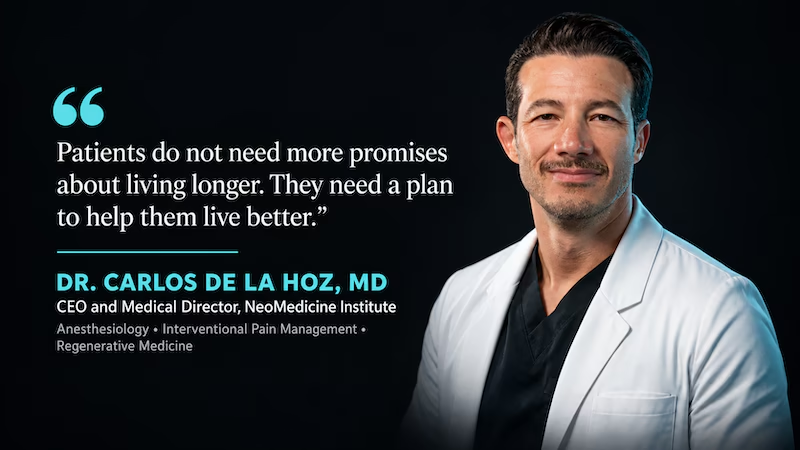
NeoMedicine Institute offers physician-guided stem cell therapy and stem cell banking at locations in Doral and Aventura, FL. Every patient is evaluated directly by Dr. Carlos De La Hoz, MD before any treatment recommendation is made. No referral is required.
Schedule a Longevity Evaluation at NeoMedicine Institute
If the biology of aging and the role of regenerative medicine in addressing it is something you want to explore further, NeoMedicine Institute in Miami offers physician-guided longevity evaluations that include stem cell therapy, stem cell banking, and a comprehensive assessment of the biological markers driving your individual aging trajectory.
No referral required. Locations in Doral and Aventura, FL.