Miami has more longevity clinics today than it did two years ago. That growth reflects genuine patient demand. It also creates a real problem. When patients search how to choose a longevity clinic Miami, they get marketing — not medicine. This blog is a framework for asking the right questions before committing to any clinic, including this one. Longevity medicine done well is physician-led, evidence-based, and longitudinal. The checklist below helps identify whether a clinic meets that standard.
Start With the Physician’s Credentials
The physician overseeing care is the most important factor in any longevity evaluation. Longevity medicine draws on cardiology, endocrinology, regenerative medicine, pain medicine, and sports medicine. Training should reflect the interventions the clinic offers.
When evaluating any longevity clinic in Miami, confirm the following about the treating physician:
• Board certification in a relevant specialty. Relevant boards include regenerative medicine, internal medicine, endocrinology, sports medicine, and pain medicine. Certification is independently verifiable through the certifying board. Ask for the specific board name and year of certification.
• Direct physician involvement at every evaluation. Will the physician personally assess you at each visit? Or will follow-up care be delegated to nurses, health coaches, or NPs? Knowing who makes clinical decisions at each stage is a reasonable question.
• Continuing education in longevity-specific topics. The field moves fast. A physician who has not engaged with current research on biological aging and regenerative biology is working from an outdated framework.
• Clinical experience with the specific interventions offered. Hormone optimization, peptide protocols, and regenerative therapies each require distinct clinical skills. Ask how long the physician has been administering each intervention.
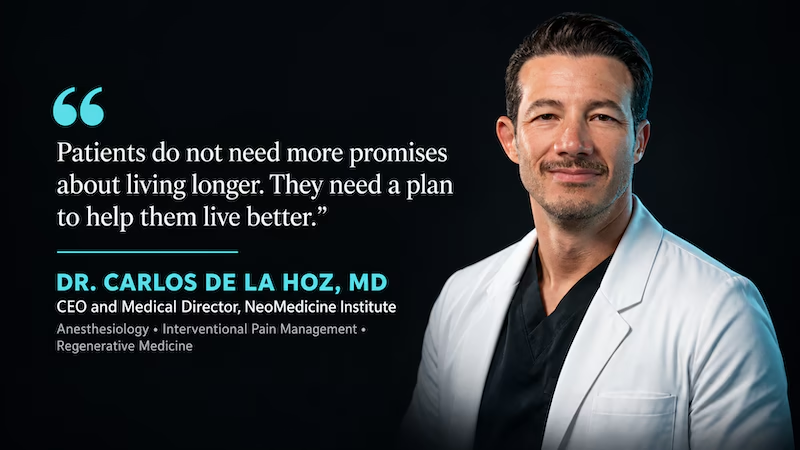
At NeoMedicine Institute, every longevity evaluation is conducted personally by Dr. Carlos De La Hoz, MD. He is triple board-certified in anesthesiology (2013), pain medicine (2020), and regenerative medicine (2021).
Evaluate the Scope of Diagnostic Testing
Diagnostic depth separates serious longevity practices from supplement-and-IV operations. A comprehensive longevity evaluation goes well beyond standard annual labs.
Ask any clinic these specific questions:
• What biomarker panel is included in the initial evaluation?
• Does testing include advanced inflammatory markers, a full hormone panel, metabolic indicators, and cardiovascular risk markers?
• Is functional fitness testing included — specifically VO2 max, body composition, and strength assessment?
• Is biological age measured through a validated method?
• Who interprets the results — the physician personally, or an algorithm?
• How often is testing repeated to track response over time?
A single panel with no follow-up tracking is not longevity medicine. Longitudinal biomarker tracking with physician interpretation is. If a clinic cannot answer these questions clearly, that is worth noting before you proceed. For a deeper look at functional assessment, see physiologic biomarkers of aging.
Understand the Treatment Approach
Watch for clinics that present a standardized longevity protocol before completing a clinical evaluation. Real longevity medicine adapts to each patient’s biology, biomarkers, and stated goals.
A properly structured treatment plan reflects specific biomarker findings, stated longevity goals, existing medical history, and willingness to engage with lifestyle intervention alongside clinical treatment.
Questions to ask at any initial consultation:
• Will my plan be based on my specific findings, or is it a standard package applied to every patient?
• How are interventions sequenced — what comes first and why?
• How is response tracked, and at what point is the plan adjusted?
At NeoMedicine Institute, the longevity plan is built around each patient’s biomarker findings. No two plans are identical. Dr. Carlos De La Hoz interprets every result personally and adjusts the plan at each follow-up based on how markers respond.

Consider the Range of Available Interventions
Longevity medicine requires coordination across multiple therapeutic domains. A clinic limited to one or two intervention categories may not address the patient’s full clinical picture.
Categories that should be available within a serious longevity practice include:
• Regenerative medicine including stem cell therapy and stem cell banking
• Metabolic and cardiovascular interventions
• Precision Nutrition for Longevity
• Peptide protocols where clinically appropriate and within current regulatory frameworks
• IV nutrient therapy including NAD+ and ozone
• Performance and recovery interventions
The advantage of a full-service longevity practice is coordination across systems. Addressing one biomarker in isolation while another driver of biological aging goes untreated is not longevity medicine.
Ask About Ongoing Monitoring and Follow-Up
Longevity medicine is not a single intervention. The trajectory matters more than any individual result.
Questions worth asking include how often you will see the physician after your initial evaluation, whether biomarker testing is repeated at scheduled intervals, how treatment response is measured between visits, and what happens if a marker does not respond to the initial intervention.
The wrong answer is come back in a year for another evaluation. That is an annual physical, not longevity medicine.
The right answer is structured re-evaluation at 90 days, 6 months, and 12 months. Plan adjustments should be based on physician-reviewed response data — not a fixed calendar.

Evaluate Transparency on Cost and Scope
Cost transparency signals clinical integrity in the longevity space. Look for clinics that present evaluation costs upfront. There should be a clear distinction between the evaluation phase and any treatment recommendations. Patients should never feel pressure to commit to long-term programs before a clinical evaluation is complete.
Avoid clinics that use high-pressure sales tactics for prepaid annual programs before any clinical assessment. Also avoid clinics that refuse to provide pricing until after a discovery call or that apply limited-time pricing to medical services.
At NeoMedicine Institute, consultation pricing is presented upfront. Treatment recommendations and associated costs are reviewed only after Dr. Carlos De La Hoz completes the physician evaluation and establishes what is clinically appropriate for that individual patient.
Consider Whether the Clinic Treats Longevity as a Service or a Specialty
Many Miami clinics offer longevity as one item among many. Body contouring, aesthetic services, wellness IVs, and a longevity plan all appear under one roof. Some patients prefer that model. Others prefer a clinic where longevity is the central clinical focus and the physician’s primary area of training.
Both models exist. The right choice depends on what you are optimizing for. Ask the question explicitly: is longevity this practice’s specialty, or one of several services on a menu?
At NeoMedicine Institute, the clinical focus is longevity and regenerative medicine. Every service offered exists to support longevity care, not as a standalone aesthetic offering.
What to Watch For When Evaluating Miami Longevity Clinics
The same warning patterns that apply to stem cell clinics apply to longevity practices. Watch for these specific red flags:
• Treatment recommendations made before physician evaluation
• Packages sold before any clinical assessment
• Heavy emphasis on proprietary supplements or protocols
• Standardized protocols applied regardless of biomarker findings
• Lack of physician engagement at follow-up appointments
• Evasive or missing responses on physician credentials
Before committing to any clinic, ask one direct question: has a physician personally reviewed my health history, biomarkers, and goals before this recommendation was made?
Frequently Asked Questions: How to Choose a Longevity Clinic in Miami
The most important factors are physician credentials, diagnostic testing scope, whether treatment is individualized to biomarker findings, and the structure of ongoing monitoring. Board certification in a relevant specialty and direct physician involvement at every visit are the strongest indicators of clinical quality. At NeoMedicine Institute, every longevity evaluation is conducted personally by Dr. Carlos De La Hoz, MD — triple board-certified in anesthesiology, pain medicine, and regenerative medicine.
Primary care focuses on managing conditions that have already developed, while longevity medicine evaluates the biological drivers of aging before disease becomes clinically apparent. The diagnostic scope is broader, testing is more frequent, and interventions target underlying mechanisms rather than symptoms. A longevity clinic typically evaluates inflammatory markers, hormone status, metabolic function, cardiovascular risk, and biological age in ways primary care does not routinely include.
Longevity clinic pricing in Miami varies based on the depth of the diagnostic panel, physician involvement, and the scope of interventions included. Initial evaluations typically include comprehensive biomarker testing, physical and functional assessment, and a physician consultation. At NeoMedicine Institute, consultation pricing is presented upfront and treatment recommendations reflect individual clinical findings rather than a standardized package.
Most patients return at 90 days, 6 months, and 12 months for biomarker reassessment and plan adjustment following the initial evaluation. The frequency depends on the interventions in place, the patient’s goals, and the rate of biomarker response. Annual evaluations alone are not longevity medicine — they are wellness physicals.
Biological age estimates how the body is aging at the cellular and physiological level, distinct from chronological age. Validated measurement methods include epigenetic clocks using DNA methylation analysis, telomere length assessment, and composite biomarker scores. Not all longevity clinics include biological age measurement — patients should ask specifically how and whether biological age is measured and tracked over time at any clinic they evaluate.
Longevity medicine is generally not covered by health insurance because most longevity-focused interventions are considered preventive or elective rather than treatment for established disease. HSA and FSA funds may apply to specific services. NeoMedicine Institute’s team reviews payment options during the initial evaluation.
Some inflammatory and metabolic markers respond within 60 to 90 days. Hormone optimization typically shows measurable response within 90 days. Functional capacity including strength, VO2 max, and energy generally improves over 3 to 6 months with sustained intervention. Biological age markers move more slowly, often requiring 12 months before measurable shifts emerge. Longevity medicine is longitudinal — the trajectory matters more than any single result.
Schedule a Longevity Evaluation at NeoMedicine Institute
Choosing a longevity clinic begins with a physician evaluation. At NeoMedicine Institute, every patient is evaluated directly by Dr. Carlos De La Hoz, MD before any treatment recommendation is made. The evaluation includes a comprehensive biomarker panel, physical and functional assessment, and a discussion of the patient’s specific longevity goals.