Something feels off. You are sleeping but waking up exhausted. Your mood shifts without warning. Your weight is changing despite no real change in how you eat or move. You feel less like yourself, but every standard blood test comes back “normal.”
For women between 35 and 55 across Miami, Doral, and South Florida, hormone imbalance symptoms in women are common and frequently misunderstood. What many women attribute to stress, aging, or lifestyle may actually reflect measurable hormonal changes, specifically the hormonal shifts that define perimenopause and the years surrounding it.
Understanding what is happening in your body is the first step. Knowing why physician-guided monitoring matters is the second. At NeoMedicine Institute in Doral and Aventura, the hormone optimization program helps women identify and address these shifts before they accelerate, not just manage symptoms after they become disruptive.

What Is Perimenopause and When Does It Begin?
Most women associate menopause with their early 50s. What many do not know is that the hormonal transition leading up to it, perimenopause, can begin as early as the mid-30s. It typically spans four to ten years before the final menstrual period.
During perimenopause, estrogen and progesterone levels do not decline steadily. They fluctuate, sometimes dramatically, from month to month and even week to week. This unpredictability is precisely why symptoms feel confusing. You may have a perfectly normal cycle one month and a completely disrupted one the next.
Perimenopause is not a disease. It is a biological transition. However, for many women, the hormonal volatility during this phase produces symptoms significant enough to affect quality of life, work performance, relationships, and long-term health. Furthermore, without physician oversight, many women navigate this transition without ever understanding what is driving their symptoms.

Symptoms That May Signal Hormonal Imbalance in Women
The challenge with hormone imbalance symptoms in women is that they overlap with many other conditions. Thyroid dysfunction, adrenal dysregulation, insulin resistance, and nutritional deficiencies can all produce similar presentations. That is why symptom recognition is only the starting point, not the diagnosis.
Women in Miami between 35 and 55 commonly report the following when hormonal changes are present:
Cycle and reproductive changes:
- Irregular periods with cycles that are shorter, longer, heavier, or lighter than usual
- Increased PMS severity in the days before menstruation
- New or worsening cramping
- Skipped cycles without pregnancy
Energy and sleep:
- Persistent fatigue that does not improve with adequate sleep
- Waking between 2 and 4 AM without a clear reason
- Night sweats that disrupt sleep quality
- Reduced stamina during physical activity
Mood and cognition:
- Increased anxiety or a new sense of low-level dread
- Mood instability, feeling fine one hour and overwhelmed the next
- Reduced tolerance for stress
- Brain fog, word-finding difficulty, and short-term memory lapses
Body composition and metabolism:
- Weight gain particularly around the midsection without dietary changes
- Difficulty losing weight despite consistent effort
- Loss of muscle tone
- Increased bloating and digestive sensitivity
Skin, hair, and libido:
- Dry skin and changes in skin texture
- Hair thinning or increased shedding
- Reduced libido or changes in sexual response
- Vaginal dryness or discomfort
Importantly, experiencing several of these symptoms does not confirm a diagnosis. A physician-ordered biomarker panel is the only way to determine whether hormonal imbalance is the driver and which hormones specifically are involved.
Why “Normal” Lab Results Do Not Always Tell the Full Story
This is one of the most frustrating experiences women describe when they first visit NeoMedicine Institute. They ask their primary care physician about hormone testing. The results come back within “normal” range. Yet they continue to feel the same.
The issue is that standard reference ranges are broad. They reflect the average across a wide population, not what is optimal for your individual biology at your specific age and life stage.
Here is a practical example. Estradiol, the primary form of estrogen, has a “normal” range in the follicular phase of roughly 19 to 144 picograms per milliliter. That is a sevenfold range. A woman at 22 and a woman at 48 could both fall within “normal” and have dramatically different clinical experiences of their hormone levels.
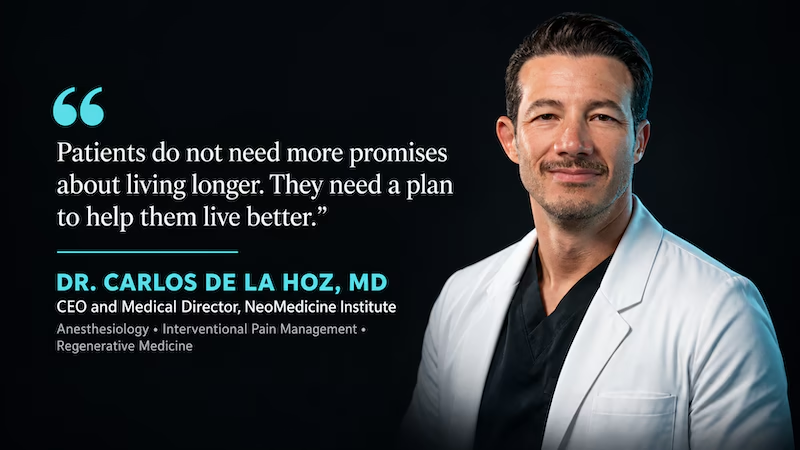
Physician-guided hormone evaluation at NeoMedicine Institute goes beyond checking whether your result falls inside a reference range. Instead, Dr. De La Hoz evaluates:
- Your full hormone panel including estradiol, progesterone, testosterone, DHEA-S, thyroid markers, and cortisol
- Your symptoms in the context of your lab values
- Your metabolic markers including insulin sensitivity, inflammatory markers, and lipid panel
- Your health goals and long-term risks
This complete picture is what makes individualized treatment possible. And it is what a standard annual physical cannot provide.
To understand the early signs that may indicate a hormone evaluation is warranted, see Signs Your Hormones Are Out of Balance.

Why Physician Monitoring Matters for Hormone Imbalance Symptoms in Women in Miami , Not Just Prescription
Getting a hormone prescription is not the same as receiving physician-monitored hormone care. This distinction matters significantly for women’s long-term health.
Hormone levels change over time. What is appropriate at the start of perimenopause may not be appropriate two years later. Without regular lab monitoring and clinical reassessment, dosing can drift and produce symptoms of either deficiency or excess that are just as disruptive as the original imbalance.
Hormones interact with every major system. Estrogen affects cardiovascular health, bone density, cognitive function, and inflammatory pathways. Progesterone influences sleep, mood, and uterine health. Testosterone affects energy, muscle, and libido. Thyroid hormones regulate metabolism across every cell in the body. Optimizing one without monitoring its downstream effects on the others is not comprehensive care.
Safety also requires ongoing oversight. Certain hormone therapies carry considerations that require physician monitoring to manage safely, including cardiovascular markers, bone density tracking, and breast health screening where appropriate. A physician who reviews your labs regularly can identify early signals and adjust your protocol before problems develop.
At NeoMedicine Institute, every patient in the hormone program receives:
- Baseline lab testing before treatment begins
- Follow-up testing at appropriate intervals to confirm response
- Protocol adjustments based on both lab values and reported symptoms
- Coordination with your other healthcare providers as needed
- Long-term monitoring as part of a broader longevity medicine strategy
This is physician-led care. It is different from receiving a prescription and a follow-up appointment in six months.
Hormones and Longevity: The Bigger Picture
For women in their 35 to 55 range, hormone optimization is not just about managing today’s symptoms. It is about protecting long-term health.
Current evidence links estrogen therapy, when started within the appropriate window relative to menopause, to measurable reductions in cardiovascular risk, preservation of bone density, reduced risk of type 2 diabetes, and lower rates of cognitive decline. These are not cosmetic outcomes. They are longevity outcomes.
At NeoMedicine Institute, hormone imbalance symptoms in women in Miami are addressed within the broader regenerative medicine services and longevity medicine framework. Hormones do not function in isolation. They interact with inflammation, cellular aging, metabolic health, and the regenerative capacity of every tissue in the body.
Addressing hormonal shifts proactively, while cellular biology is still in a favorable range, is meaningfully different from waiting until symptoms become severe or structural changes have progressed.
Take the Next Step
NeoMedicine Institute offers women’s hormone optimization in Miami through a physician-led program that combines comprehensive testing, individualized treatment, and long-term monitoring.
Women throughout the Miami metro area including Doral, Aventura, Hialeah, Miami Lakes, Coral Gables, Brickell, and across South Florida who are noticing changes in energy, mood, cycle, sleep, or body composition can begin with a physician consultation.
Call (786) 264-2999 or visit our hormone optimization program to schedule your evaluation.
Frequently Asked Questions About Hormone Imbalance Symptoms in Women in Miami
Common signs include fatigue, irregular cycles, mood instability, night sweats, brain fog, weight gain around the midsection, and reduced libido. These symptoms overlap with other conditions, so physician-ordered lab testing at NeoMedicine Institute in Doral is the only reliable way to confirm whether hormonal imbalance is the cause.
Perimenopause can begin as early as the mid-30s and typically spans four to ten years before the final menstrual period. Many women in Miami experience significant hormonal fluctuations in their late 30s and early 40s, well before they expect menopause to be relevant.
Standard lab reference ranges are broad and reflect population averages, not individual optimal levels. A result within the “normal” range may still represent a significant shift from your personal baseline. At NeoMedicine Institute, Dr. De La Hoz evaluates your full hormone and metabolic panel in the context of your symptoms and health history, not just against a reference range.
When properly evaluated, dosed, and monitored by a physician, hormone therapy carries a significantly more favorable risk profile than older studies suggested. In November 2025, the FDA removed longstanding black box warnings from menopausal hormone therapy products. At NeoMedicine Institute, patients receives ongoing lab monitoring and clinical reassessment throughout their treatment.
NeoMedicine Institute provides a complete physician evaluation including a full biomarker panel, medical history review, and individualized protocol, followed by regular lab monitoring and protocol adjustments over time. Online prescription services typically offer a one-time consultation without ongoing physician oversight. For women with complex presentations or long-term health goals, that difference in clinical depth directly affects safety and outcomes.