Modern medicine continues to shift toward approaches that emphasize personalization, prevention, and long-term planning. Advances in regenerative science are encouraging clinicians to explore ways to support the body’s natural repair processes rather than relying exclusively on reactive care. One area gaining increasing attention within this landscape is adult stem cell banking.
Instead of waiting until injury or illness occurs, adult stem cell banking allows individuals to preserve their own stem cells for potential future medical use. This proactive approach reflects growing interest in longevity-focused care and regenerative medicine as research continues to expand what may be possible in the years ahead.
Understanding Stem Cells and Their Role in the Body
Stem cells are often described as the body’s foundational or “building block” cells. Unlike specialized cells that perform a single function, stem cells have the ability to self-renew and, under specific biological conditions, differentiate into other cell types.
Depending on signaling and environment, stem cells may develop into:
- Muscle tissue
- Cartilage
- Tendons and ligaments
- Bone
- Other connective tissues
Researchers continue to study how stem cells participate in tissue repair, cellular communication, and inflammatory signaling. Within regenerative medicine, these properties have made stem cells an area of significant scientific interest, particularly in orthopedic care, injury recovery, and age-related tissue changes.
Why Adults Are Exploring the Future of Adult Stem Cell Banking
For many years, stem cell banking was most commonly associated with umbilical cord blood collection at birth. While cord blood banking remains valuable, it does not address adults who wish to preserve their own cells later in life.
Adult stem cell banking offers individuals the option to store their own autologous stem cells for possible future medical use. Autologous cells originate from the individual, which means they are biologically compatible and do not carry the same immune considerations as donor-derived cells.
As more cell-based therapies progress through research, clinical trials, and regulatory pathways, interest in preserving stem cells earlier in adulthood has continued to grow. Many people view adult stem cell banking as a form of long-term health planning rather than a response to an immediate medical issue.
Types of Stem Cells Commonly Banked
Adult stem cell banking typically focuses on specific stem cell populations that have been widely studied in clinical and research settings.
Mesenchymal Stem Cells (MSCs)
Mesenchymal stem cells (MSCs) are among the most commonly preserved stem cells in adult banking programs. These cells are capable of self-renewal and differentiation into connective tissue types such as bone, cartilage, muscle, and ligament tissue.
MSCs are being studied for their potential role in:
- Tissue repair and regeneration
- Inflammatory modulation
- Cellular signaling involved in healing processes
Clinical trials continue to evaluate MSCs for possible applications in orthopedic conditions, degenerative joint disorders, and inflammatory diseases. While research is ongoing, MSCs remain central to many regenerative medicine investigations.
Hematopoietic Stem Cells (HSCs)
Hematopoietic stem cells (HSCs) are responsible for generating all types of blood cells. These cells are found in bone marrow, peripheral blood, and umbilical cord blood.
HSCs are already used in established medical procedures such as:
- Bone marrow transplants
- Stem cell transplants for certain blood and immune-related conditions
Ongoing research continues to explore additional therapeutic uses for HSCs in autoimmune and genetic disorders.
What Is Driving Interest in Stem Cell Research
As the body ages, its ability to respond efficiently to tissue injury naturally declines. Researchers believe this change may be related, in part, to reductions in stem cell number and functional capacity over time.
This understanding has fueled significant interest in studying how stem cells behave at the cellular level and how their regenerative properties may support healthy aging. Each year, thousands of clinical trials worldwide investigate stem cell-based approaches for conditions involving:
- Orthopedic degeneration
- Immune system dysfunction
- Metabolic health
- Age-related disease
Estimates suggest that a substantial portion of the population may benefit from regenerative medicine applications at some point during their lifetime as research continues to advance.
Adult Stem Cell Banking at NeoMedicine Institute
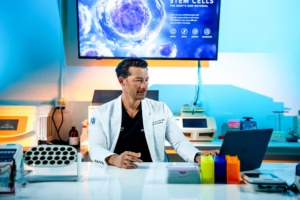
At NeoMedicine Institute, adult stem cell banking is offered directly within the clinic. Patients have the option to harvest and cryogenically preserve their own stem cells on-site, allowing continuity of care under medical supervision.
This integrated approach allows patients to both utilize stem cell therapies when clinically appropriate and bank their cells for potential future use as regenerative medicine continues to evolve. Stored cells remain accessible to the patient, subject to clinical judgment and prevailing medical standards.
The Adult Stem Cell Banking Process
Adult stem cell banking follows a medically supervised process that prioritizes safety and long-term preservation. At NeoMedicine Institute, clinicians tailor each step to individual clinical factors rather than relying on a standardized protocol.
Through this process, individuals preserve their own stem cells for potential future medical use. Care teams carry out all steps in a controlled clinical environment, which helps support patient safety and cell integrity.
Below is an overview of how adult stem cell banking typically takes place.
Overview of the Process
Medical Evaluation
A healthcare provider reviews medical history and determines whether stem cell collection is appropriate based on individual factors.
Stem Cell Retrieval
Stem cells are collected using a minimally invasive outpatient procedure. The collection method depends on clinical considerations and patient-specific factors.
Processing and Cryopreservation
Collected cells undergo laboratory processing, quality testing, and cryogenic preservation under controlled conditions.
Secure Long-Term Storage
Once preserved, stem cells are stored securely and remain available for potential future medical use when clinically appropriate.
Why Timing Matters
Stem cell quality is influenced by age. Over time, both the number and regenerative capacity of stem cells naturally decline. Environmental exposures, inflammation, and cellular stress can also affect DNA integrity.
For this reason, individuals considering adult stem cell banking often explore preservation earlier in adulthood, when cells may demonstrate stronger regenerative characteristics in laboratory and clinical settings.
The Future of Regenerative Medicine
Advances in stem cell research continue to shape the future of medicine. Research institutions worldwide are investigating applications such as:
- Tissue engineering
- Personalized regenerative therapies
- Cellular repair strategies
- Advanced approaches to degenerative conditions
While many applications remain under investigation, continued progress suggests an expanding role for stem cells in future medical care. Preserving stem cells today may allow individuals access to emerging therapies as they become clinically available.
If you’re interested in learning more about adult stem cell banking and whether it may be appropriate for your health goals, a consultation with the NeoMedicine Institute team could help determine next steps based on your individual medical history and needs.
NeoMedicine Institute is headquartered in Doral, Florida, with an additional location in Aventura, serving patients throughout South Florida.
Frequently Asked Questions About Adult Stem Cell Banking
Adult stem cell banking involves collecting and cryogenically preserving a person’s own stem cells for potential future medical use.
Does stem cell banking guarantee future treatment?
No. Banking stem cells does not guarantee treatment outcomes. It provides access to preserved cells that may be used if clinically appropriate and consistent with current medical guidance.
Are banked stem cells safe to use later?
When collected, processed, and stored under medical supervision, banked stem cells may remain viable long term. Any future use depends on clinical evaluation and applicable standards of care.
Who may consider adult stem cell banking?
Adults interested in regenerative medicine, longevity planning, or future medical options may consider stem cell banking after consultation with a qualified healthcare provider.
Can banked stem cells be used immediately?
Use of stored stem cells depends on clinical context, medical appropriateness, and prevailing regulatory guidance at the time of consideration.