Chronic pain does not always require surgery. For many patients seeking chronic pain treatment in Miami, the most meaningful clinical decisions happen in the space between conservative care and surgical intervention. This blog explains how physician-guided interventional pain management and regenerative medicine work together, who they are appropriate for, and what the evaluation process looks like at NeoMedicine Institute.
The Gap Between Conservative Care and Surgery
Most patients with chronic pain are told they have two options. The first is conservative care including physical therapy, anti-inflammatory medications, and rest. The second is surgery. Between those two options sits a meaningful clinical gap that interventional pain management and regenerative medicine are increasingly filling.
For many patients seeking chronic pain treatment in Miami, that gap is where the most important clinical decisions happen. It matters most for patients whose pain has not responded adequately to conservative care. Some are not yet surgical candidates. Others want to exhaust non-surgical options before considering surgery. It also matters for patients who are surgical candidates but want an independent physician evaluation of whether surgery is actually necessary given their specific imaging findings and functional status.
At NeoMedicine Institute, every patient evaluation begins with a review of existing imaging including X-ray, MRI, or CT when available. No procedure is recommended before the physician has reviewed what the imaging shows and assessed the patient’s full clinical picture.
Who Gets Chronic Pain Today — It Is Not Just Older Patients
Chronic pain is no longer primarily a condition of older adults. A growing proportion of pain patients presenting to physician-led clinics in Miami are in their twenties, thirties, and forties. Many of them share a common profile.
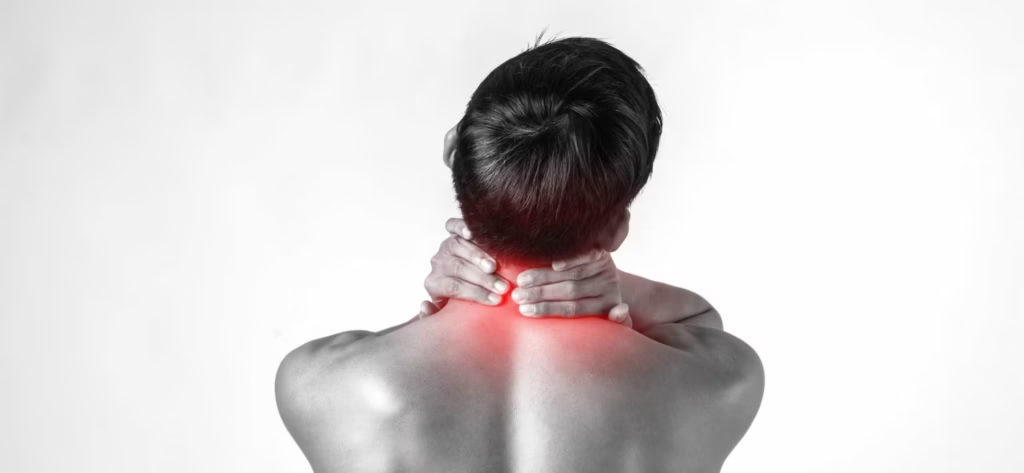
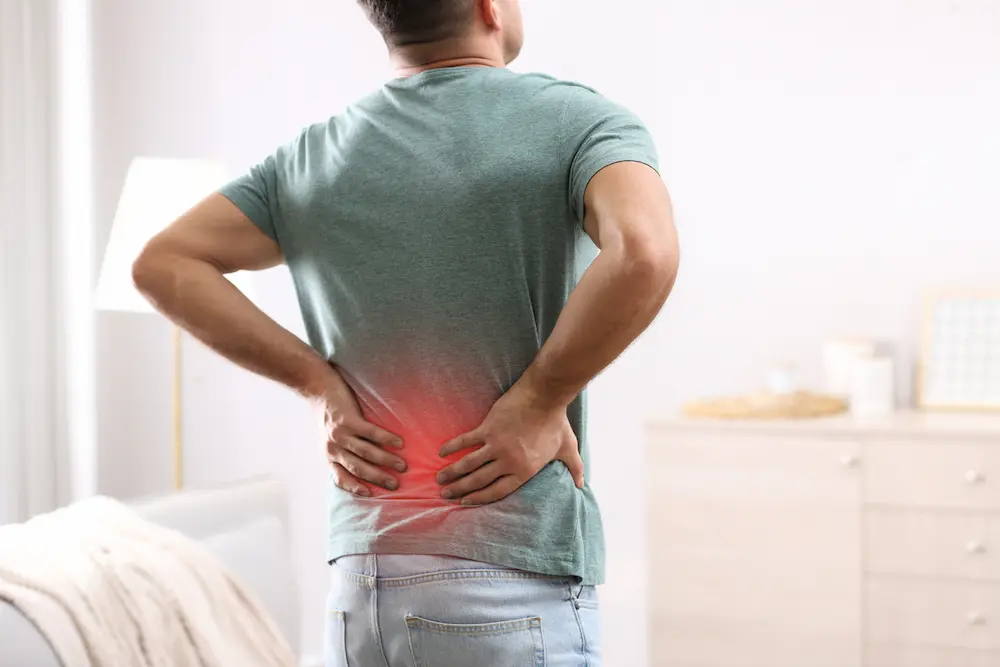
They sit for extended periods, often 8 to 10 hours a day at a desk or in front of a screen. They have developed chronic low back pain, neck pain, or shoulder pain. No single traumatic injury caused it. Sustained postural loading over months or years did. Prolonged sitting with forward head posture and rounded shoulders places sustained compressive and shear forces on the cervical and lumbar spine. Over time, those forces contribute to disc degeneration, facet joint irritation, and muscular imbalance. Conservative care alone may not fully resolve these changes.
This patient population is underserved by the traditional pain management model. They are not candidates for fusion surgery. They are not responding to physical therapy alone. They need a physician who understands both the interventional options available and the lifestyle drivers behind their pain and who builds a plan that addresses both.

How Interventional Pain Management Works
Interventional pain management uses minimally invasive procedures to target specific anatomical pain generators — the structures in the spine, joints, or soft tissue that are producing the pain signal. Common interventional approaches evaluated at NeoMedicine Institute include:
- Epidural steroid injections — delivering anti-inflammatory corticosteroid medication to the epidural space to reduce nerve root inflammation from disc herniation or spinal stenosis. Used selectively and only when clinically indicated based on imaging findings and patient presentation.
- Facet joint injections — targeting the small synovial joints of the spine that become inflamed from degeneration or sustained postural loading. Particularly relevant for patients with axial low back or neck pain without significant radiculopathy.
- Medial branch blocks — interrupting the pain signal from facet joints by targeting the medial branch nerves that supply them. Used both diagnostically and therapeutically to confirm facet-mediated pain and provide relief.
- Trigger point injections — addressing myofascial pain from hyperirritable muscle bands that refer pain to surrounding areas. Common in patients with chronic neck, shoulder, and upper back pain from postural overload.
- Nerve root blocks — targeting specific nerve roots contributing to radicular pain patterns such as sciatica or cervical radiculopathy confirmed on imaging.
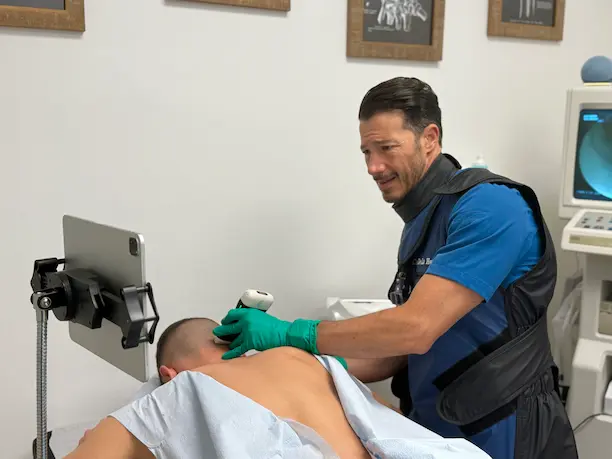
Every procedure at NeoMedicine Institute is performed under image guidance using fluoroscopy or ultrasound, ensuring precise delivery to the targeted anatomical structure. Dr. Carlos De La Hoz reviews imaging before every procedure to confirm the anatomical source of pain and establish clinical appropriateness. Image-guided delivery is not standard at every pain clinic in Miami. At NeoMedicine Institute it is standard because precision matters for both safety and clinical outcome.
Interventional Pain Management as a Bridge — Not a Cure
This is one of the most important distinctions in interventional pain medicine and one that Dr. Carlos De La Hoz applies consistently in clinical practice.
Interventional procedures are not a permanent solution for most chronic pain conditions. Their primary clinical role is to reduce the pain signal enough to allow the patient to engage meaningfully in rehabilitation. That rehabilitation targets the muscles supporting the affected joint or spinal segment, corrects the postural and movement patterns that contributed to the pain, and builds the functional resilience that protects against recurrence.
A patient with chronic low back pain from lumbar facet degeneration who receives a medial branch block and then uses that window of reduced pain to strengthen their posterior chain, improve hip mobility, and correct sitting mechanics is in a fundamentally different clinical position six months later than a patient who receives the same block and returns to the same lifestyle unchanged.
The block reduces the pain signal. Rehabilitation builds the functional foundation. This sequencing is deliberate and physician-guided at NeoMedicine Institute.
When Regenerative Medicine Is Evaluated
For some patients, regenerative medicine may be evaluated independently of any interventional procedure, or in combination with one, depending on what the clinical findings support. The two approaches are not automatically paired.
PRP therapy delivers a concentrated volume of growth factors derived from the patient’s own blood directly to the damaged tissue, supporting the repair and remodeling process. Stem cell therapy introduces the patient’s own regenerative biological material collected from peripheral blood, bone marrow, or adipose tissue into the treatment area to support cellular repair at the site of tissue damage.
Whether regenerative medicine is evaluated alongside interventional pain management, before it, after it, or independently depends on the physician’s findings. No combination is assumed. Every recommendation reflects the individual patient’s imaging, clinical presentation, and treatment goals.
For patients whose chronic pain involves a significant central sensitization component, ketamine therapy may also be evaluated as part of a comprehensive pain management plan.
Imaging First — Always
One of the foundational principles at NeoMedicine Institute is that imaging is reviewed before any pain management procedure is recommended. This sounds obvious. In practice, not every clinic operates this way.
Reviewing existing MRI, X-ray, or CT imaging before recommending a procedure allows the physician to confirm that the proposed procedure targets the actual anatomical source of the patient’s pain. It also identifies contraindications or anatomical variations that affect the safety or approach of the procedure, avoids recommending procedures that are unlikely to be effective given what the imaging shows, and allows the physician to counsel the patient accurately about what their findings mean for prognosis and treatment options.
If a patient arrives without recent imaging, Dr. Carlos De La Hoz will recommend appropriate imaging before proceeding. This step is not bureaucratic. It is a clinical necessity.
The Young Patient With Lifestyle-Driven Chronic Pain
For the patient in their twenties or thirties with chronic low back or neck pain driven by prolonged sitting and postural loading, the treatment framework at NeoMedicine Institute follows a structured clinical sequence.
A comprehensive physician evaluation first establishes the anatomical pain source through clinical examination and imaging review. If an interventional procedure is clinically indicated and medically necessary, it is performed under image guidance to reduce the pain signal and create a functional rehabilitation window. This window is then used intentionally through structured rehabilitation targeting the specific muscular weaknesses and movement patterns driving the pain. Reassessment determines whether regenerative medicine is indicated based on the degree of tissue damage present and the patient’s clinical response.
This is not a protocol applied to every young patient with back pain. It is a framework that reflects individual clinical findings at every step. Some patients respond fully to a single interventional procedure and structured rehabilitation. Others require a more comprehensive regenerative approach. The physician evaluation determines which path is appropriate.
Frequently Asked Questions — Chronic Pain Treatment in Miami
Interventional pain management uses minimally invasive procedures including injections and nerve blocks to reduce pain without surgical incision or implantation. Unlike surgery, interventional procedures are outpatient, require minimal recovery time, and can be adjusted based on clinical response. At NeoMedicine Institute, every procedure is performed under image guidance by Dr. Carlos De La Hoz, MD — triple board-certified in anesthesiology, pain medicine, and regenerative medicine.
Yes. Prolonged sitting with poor posture places sustained compressive and shear forces on the cervical and lumbar spine that contribute to disc degeneration, facet joint irritation, and muscular imbalance over time. Many patients in their twenties and thirties presenting with chronic low back or neck pain have no single traumatic injury — their pain has developed from accumulated postural loading. Physician-guided evaluation can identify the specific anatomical source and build an individualized treatment plan.
Interventional procedures are generally not a permanent solution for most chronic pain conditions. Their primary role is to reduce the pain signal enough to allow the patient to engage meaningfully in rehabilitation including strengthening supporting musculature and correcting postural patterns. At NeoMedicine Institute, interventional procedures are used as a bridge to rehabilitation and recovery, not as a standalone treatment.
Yes. Every interventional procedure at NeoMedicine Institute is performed under fluoroscopic or ultrasound image guidance. Imaging is also reviewed before any procedure is recommended to confirm the anatomical source of pain and establish clinical appropriateness. Image-guided delivery is a standard of care that not every pain clinic in Miami applies.
Regenerative medicine is evaluated when the underlying driver of pain involves tissue damage including cartilage loss, tendon degeneration, or disc pathology. It may be considered alongside interventional pain management, independently, or as a next step depending on what the physician finds during evaluation. PRP therapy and stem cell therapy are never assumed to be part of every pain management plan. Every decision is individualized through physician evaluation.
Schedule a Pain Management Evaluation at NeoMedicine Institute
Chronic pain that has not responded to conservative care deserves a physician evaluation before surgery is considered. At NeoMedicine Institute, Dr. Carlos De La Hoz, MD reviews imaging, evaluates the anatomical source of pain, and builds an individualized plan that may include interventional pain management, regenerative medicine, or both depending on what the clinical findings support.