If you are living with joint pain, a degenerative condition, or a musculoskeletal injury that has not responded to conventional treatment, stem cell therapy in Miami may be worth a serious conversation with a physician. Interest in stem cell treatment across Miami and South Florida has grown steadily — not because of hype, but because the clinical evidence base has continued to expand and more patients are reaching the limits of what cortisone shots and surgery can offer them.
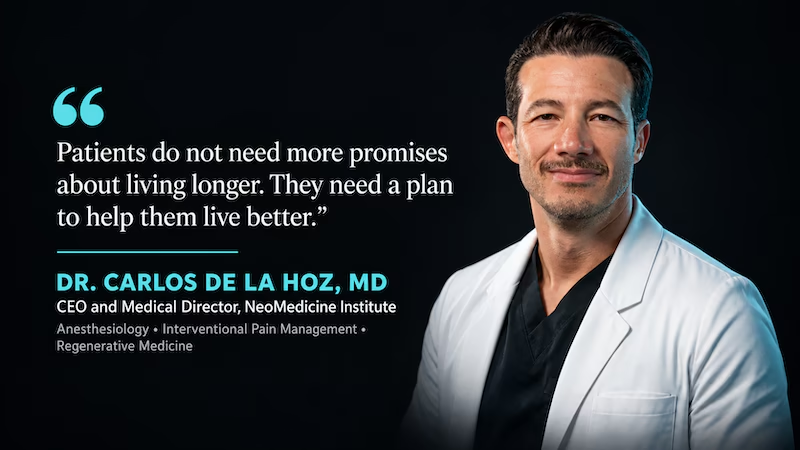
Patients searching for stem cell therapy will find no shortage of options. What is harder to find is a program where treatment is genuinely physician-led, individually evaluated, and integrated with a broader clinical strategy. At NeoMedicine Institute in Doral and Aventura, stem cell therapy is one component of a comprehensive regenerative medicine program overseen by Dr. Carlos De La Hoz, MD — triple board-certified in anesthesiology, pain medicine, and regenerative medicine.
This article covers what stem cell therapy actually is, which conditions benefit most, how it compares to conventional care, and what the evaluation and treatment process looks like at NeoMedicine Institute.
What Stem Cell Therapy Is — and What It Is Not
Stem cell therapy is a form of regenerative medicine. It uses biologic material derived from the patient’s own body — or in some cases from carefully evaluated donor sources — to support the repair and regeneration of damaged tissue.
Stem cells are the body’s foundational repair cells. Unlike specialized cells that perform a single function, stem cells could self-renew and, when placed in the right biological environment, differentiate into the specific cell types needed for repair. In clinical regenerative medicine, the stem cells most commonly used are:
- Mesenchymal stem cells (MSCs) — found in bone marrow and adipose (fat) tissue, capable of differentiating into bone, cartilage, muscle, and connective tissue
- Bone marrow aspirate concentrate (BMAC) — a concentrated preparation drawn from the patient’s own bone marrow at the posterior iliac crest
- Adipose-derived stem cells — harvested from the patient’s own fat tissue, typically found in higher concentrations than bone marrow on a per-volume basis
What stem cell therapy is not is a guaranteed cure or a one-size-fits-all solution. Every patient requires a thorough physician evaluation to determine whether their condition, health status, and treatment history make them an appropriate candidate. At NeoMedicine Institute, no patient receives treatment without that evaluation first.
To understand the broader science behind how stem cells behave as we age, see The Science Behind Stem Cell Banking.
Which Conditions Does Stem Cell Therapy Address in Miami?
The strongest evidence for stem cell therapy in clinical settings centers on musculoskeletal conditions — particularly those involving cartilage, joints, tendons, and connective tissue where the body’s natural repair capacity is limited by poor blood supply and chronic inflammation.
At NeoMedicine Institute, stem cell therapy is evaluated for patients with conditions including:
- Osteoarthritis — knee, hip, shoulder, and other joints experiencing cartilage degeneration
- Rotator cuff tears — partial tears and chronic tendon damage not resolved through conservative care
- Meniscus injuries — degenerative or partial tears causing persistent pain and functional limitation
- Chronic tendinopathy — including Achilles tendinopathy, patellar tendinitis, and lateral epicondylitis
- Degenerative disc conditions — spinal degeneration with associated pain and reduced mobility
- Ligament injuries — partial tears and chronic instability in the knee, ankle, and other joints
These are conditions where conventional treatments — physical therapy, anti-inflammatory medications, and cortisone injections — often provide temporary relief without addressing the underlying tissue damage. Stem cell therapy aims to work differently by supporting the biological repair process at the cellular level.
For a deeper look at how regenerative therapies fit into modern clinical decision-making, see How Regenerative Medicine Is Transforming Healthcare.
Stem Cell Therapy vs. Cortisone Shots and Surgery
This is one of the questions patients most commonly bring to consultations — and it deserves a clear answer.
Cortisone injections reduce inflammation quickly. For many patients, they provide meaningful short-term relief. However, cortisone does not repair tissue. Repeated injections over time can actually weaken tendons and cartilage. They are a management tool, not a healing mechanism.
Surgery addresses structural damage directly — but it comes with recovery time, rehabilitation demands, anesthesia risks, and outcomes that are not guaranteed. Many patients are not ideal surgical candidates, or they seek to delay or avoid surgery if a non-surgical path is clinically viable.
Stem cell therapy occupies a different lane entirely. Rather than suppressing symptoms or restructuring anatomy, it attempts to influence the tissue environment at the cellular level — introducing regenerative signaling that the body can no longer produce adequately on its own. This is why it is most appropriately considered when:
- Conservative treatments have been tried and provided incomplete relief
- The patient is not a strong surgical candidate or prefers to explore non-surgical options
- The condition involves tissue degeneration rather than acute traumatic injury requiring structural repair
How NeoMedicine Evaluates Candidacy
No two patients are identical. At NeoMedicine Institute, stem cell therapy candidacy is determined through:
- Comprehensive medical history review — prior diagnoses, treatments attempted, and response history
- Imaging review — MRI and other relevant imaging to assess the extent of tissue damage
- Physical examination — functional assessment of the affected area
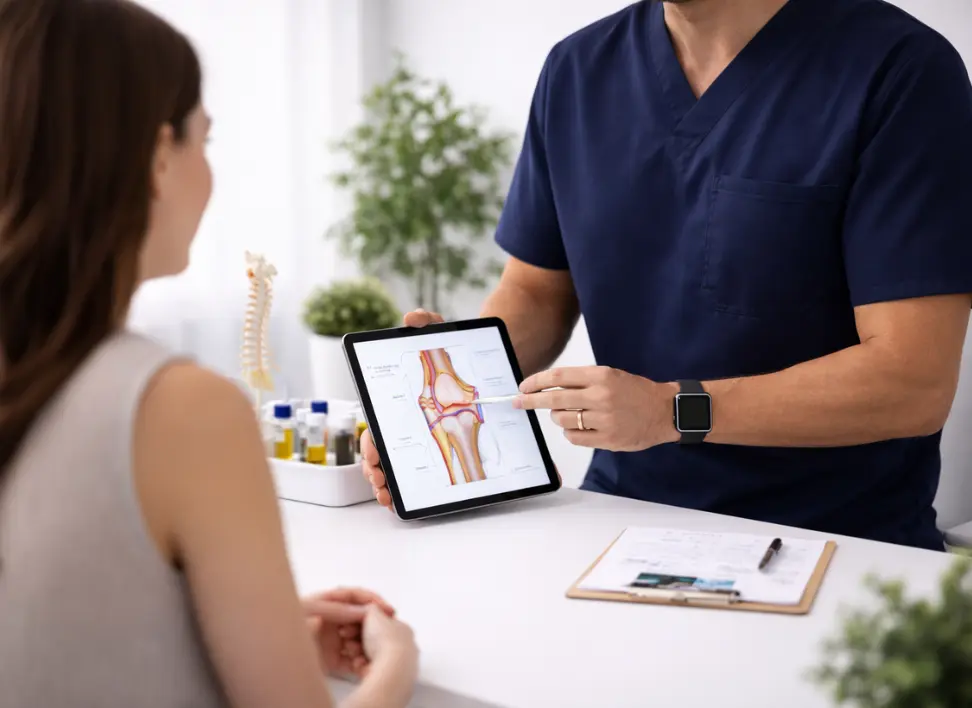
- Physician consultation — direct discussion of treatment goals, realistic expectations, and how stem cell therapy fits into the broader care plan
This process is what separates a clinically sound program from a clinic that books procedures without adequate evaluation.
What the Treatment Process Looks Like
Patients approved for stem cell treatment at NeoMedicine Institute follow a structured process designed for precision and safety.
A typical treatment course includes:
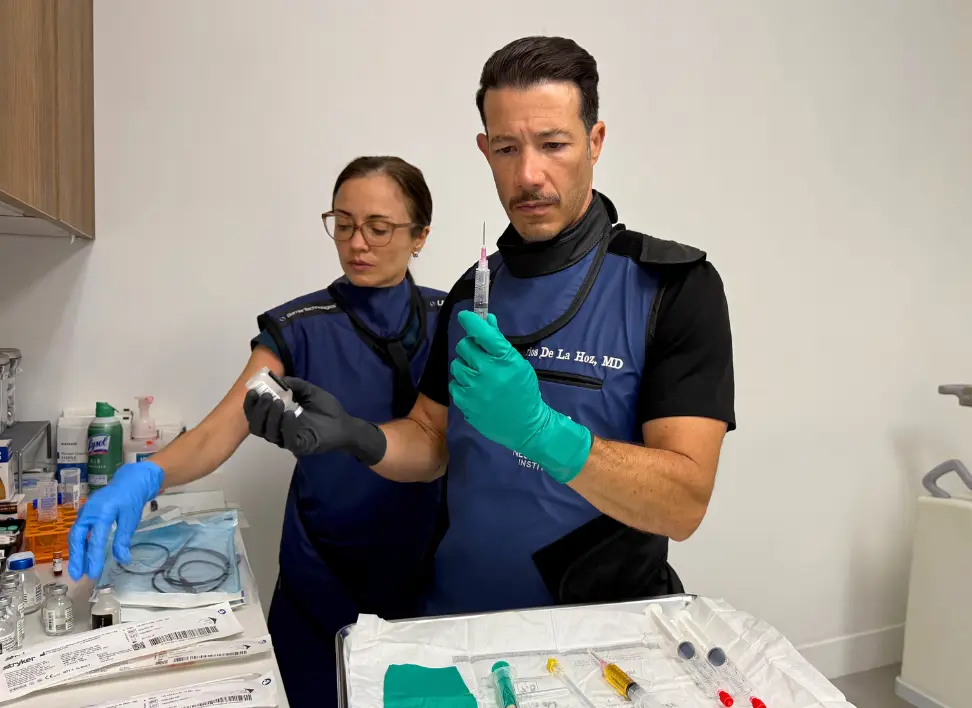
- Cell collection — bone marrow aspiration or adipose tissue harvest, performed under sterile conditions by the physician
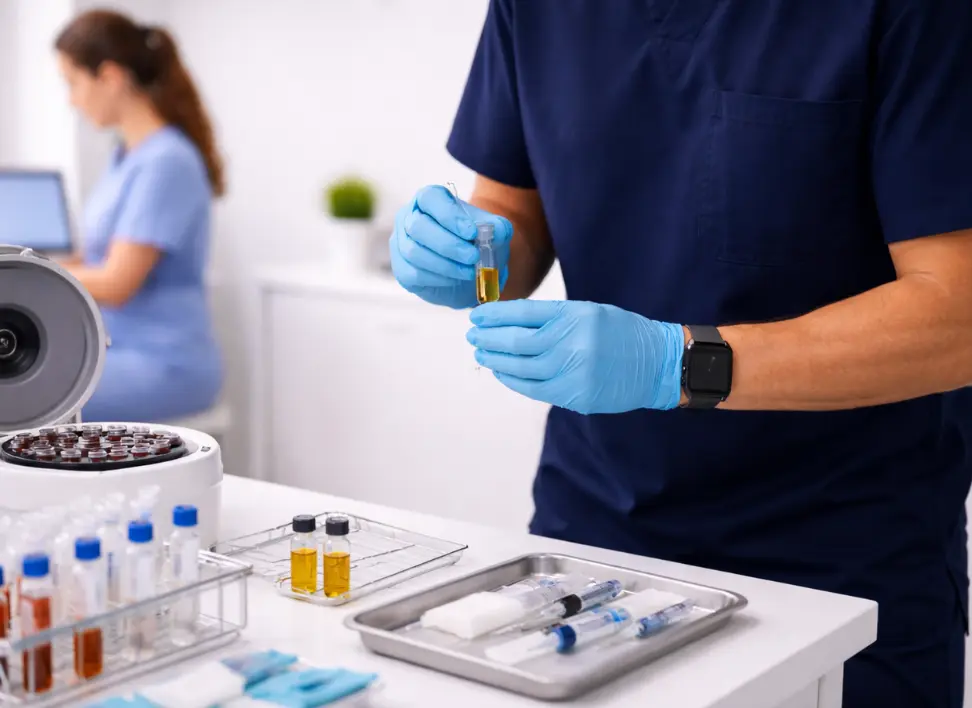
- Processing — the collected material is prepared using centrifugation to concentrate the regenerative cells and growth factors
- Guided injection — the concentrated preparation is delivered precisely to the target area, typically using imaging guidance for accuracy
- Follow-up monitoring — progress is tracked over the weeks and months following treatment, with adjustments made based on clinical response
Most procedures are performed on an outpatient basis. Recovery protocols vary by condition and treatment area but generally involve a period of modified activity before gradual return to normal function.
For patients already involved in NeoMedicine’s pain management program, stem cell therapy may be coordinated as part of a broader, integrated approach to pain reduction and functional recovery.
Why Physician-Led Care Makes a Difference
Not all stem cell clinics operate at the same clinical standard. The quality of cell collection, the precision of injection delivery, the rigor of the evaluation process, and the experience of the physician overseeing treatment all directly affect outcomes.
Dr. De La Hoz’s triple board certification in anesthesiology, pain medicine, and regenerative medicine means every aspect of the treatment process — from candidacy evaluation to cell preparation to injection technique to follow-up monitoring — is guided by deep, cross-disciplinary clinical expertise. His background in anesthesiology in particular informs procedural precision that general wellness practitioners cannot replicate.
Physician-Led Program vs. Typical Wellness Clinic
Physician-Led Program
- Board-certified physician performs and supervises every step
- Comprehensive medical and imaging evaluation required
- Cell collection and processing completed in-house under sterile clinical conditions
- Injection delivery guided by imaging for precision
- Treatment integrated with pain management and longevity medicine goals
Typical Wellness Clinic
- Limited physician involvement in procedure execution
- Basic intake forms without full diagnostic review
- Variable cell processing standards
- Standard injection approach without imaging guidance
- Stem cell therapy offered as a standalone service
These differences directly affect both safety and clinical outcomes.
How Stem Cell Therapy Fits Within a Longevity Framework
At NeoMedicine Institute, stem cell therapy is not a standalone intervention. It sits within a comprehensive longevity and regenerative medicine program that may also include:
- IV therapy and ozone— supporting cellular nutrition, circulation, and systemic recovery
- Pain management — interventional and minimally invasive approaches to chronic pain
- Ketamine therapy — for patients whose pain carries a significant neurological or mood component
- Stem cell banking — proactive preservation of regenerative cells for future clinical use
For patients interested in how banking connects to long-term health planning, see Why Adult Stem Cell Banking Is Making Waves.
This integrated approach allows Dr. Carlos De La Hoz to coordinate care across every dimension of a patient’s health — not just the presenting joint or condition.
Take the Next Step
NeoMedicine Institute offers stem cells in Miami through a physician-led program built on rigorous evaluation, clinical precision, and long-term outcome monitoring.
Patients in Miami, Doral, Aventura, and across South Florida who are exploring stem cell therapy for joints, chronic pain, or tissue degeneration could begin with a consultation.
Call (786) 264-2999 or visit our regenerative medicine services page to learn more.
Frequently Asked Questions About Stem Cell Therapy in Miami
Yes. NeoMedicine Institute in Doral and Aventura offers physician-guided stem cell therapy for knee conditions including osteoarthritis and cartilage degeneration. Every patient undergoes a comprehensive medical and imaging evaluation to determine whether they are an appropriate candidate before treatment begins.
Most patients begin noticing changes within four to twelve weeks following treatment. The timeline varies based on the condition treated, the type of stem cells used, and the individual’s overall health and regenerative capacity. Some patients experience gradual improvement over several months as the biological repair process continues.
They work through fundamentally different mechanisms. Cortisone reduces inflammation temporarily but does not repair tissue. Stem cell therapy aims to support the body’s cellular repair process, which may offer longer-lasting benefit for appropriate candidates. The right approach depends on the specific condition, its severity, and the patient’s treatment history — which is why physician evaluation is essential before proceeding with either option.
The cost of stem cell therapy in Miami varies based on the condition being treated, the type and source of cells used, and the number of sessions required. NeoMedicine Institute provides individualized pricing following a consultation. Most stem cell therapies are not covered by insurance and are paid out of pocket. HSA and FSA funds are generally eligible.
For some patients with moderate osteoarthritis, stem cell therapy may help reduce pain and improve function in a way that delays or reduces the need for surgical intervention. However, it is not appropriate for every patient or every stage of joint degeneration. A physician evaluation including imaging review is the only way to determine whether stem cell therapy is a viable alternative to surgery for an individual patient’s specific condition.