Knee pain is one of the most common reasons patients in Miami seek regenerative medicine. Whether the cause is osteoarthritis, a sports injury, meniscus damage, or years of accumulated joint wear, the question most patients eventually ask is the same: is there something between physical therapy and surgery? For many patients, the answer is yes. Stem cell therapy for knee pain in Miami is a physician-evaluated regenerative option that uses the patient’s own biological material to support the tissue environment inside the joint. This blog explains how it works, what the clinical research shows, who may be a candidate, and how NeoMedicine Institute evaluates and approaches knee pain treatment.
Why the Knee Is One of the Most Common Targets for Stem Cell Therapy
The knee is the largest and most complex joint in the body. It bears the full weight of the body during standing, walking, and exercise — and it takes the brunt of impact during athletic activity. Over time, the cartilage that cushions the knee joint degrades. Unlike most other tissues in the body, cartilage has a very limited natural blood supply and limited capacity for self-repair.
This is precisely why regenerative medicine is most actively researched for knee conditions. When cartilage degrades, the body cannot reliably replace it on its own. The goal of stem cell therapy for knee pain is not to reverse this process entirely — it is to support the tissue environment inside the joint, reduce inflammation, and potentially slow the progression of degeneration in patients whose joints retain meaningful biological activity.
The most common knee conditions evaluated for stem cell therapy at NeoMedicine Institute include:
- Knee osteoarthritis — degenerative cartilage loss that causes pain, stiffness, and reduced range of motion. The most common indication for regenerative medicine in the knee.
- Meniscus tears — partial tears of the medial or lateral meniscus that have not responded adequately to conservative care
- ACL and ligament injuries — partial tears and chronic instability where non-surgical regenerative support may be evaluated
- Chondral defects — focal areas of cartilage damage from prior injury or overuse
- Post-surgical knee pain — persistent pain following prior knee procedures where regenerative support may be clinically appropriate
- Athletic and overuse injuries — chronic knee pain in active patients and athletes that has not responded to physical therapy or conservative management
What Stem Cell Therapy for Knee Pain Actually Involves
Stem cell therapy for knee pain is not a single standardized procedure. The source of the stem cells, the preparation method, and the delivery approach all vary based on the individual patient’s clinical findings and the physician’s assessment of what the joint environment requires.
At NeoMedicine Institute, stem cell therapy for knee pain uses only the patient’s own biological material — collected from peripheral blood, bone marrow aspirate concentrate (BMAC), or adipose tissue. No donor material is used. Every approach is evaluated individually based on what the patient’s imaging and clinical findings support.
Peripheral blood stem cells: Stem cells are mobilized from the patient’s own bloodstream and collected through a standard blood draw. This is the least invasive collection method.
Bone marrow aspirate concentrate (BMAC): Bone marrow is aspirated from the patient’s iliac crest — the rear portion of the hip bone — and processed to concentrate the regenerative cellular material. BMAC is one of the most established autologous regenerative approaches for orthopedic conditions including knee osteoarthritis.
Adipose-derived stem cells: Regenerative cellular material is collected from the patient’s own fat tissue through a minimally invasive procedure and processed for injection into the knee joint.
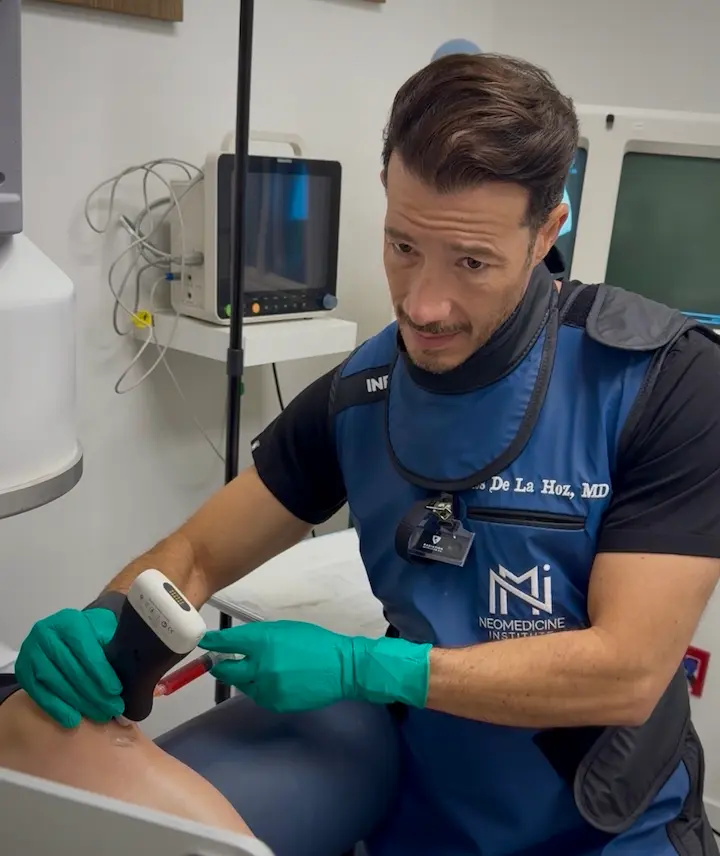
The collection method Dr. Carlos De La Hoz recommends reflects the individual patient’s clinical picture — not a standardized protocol applied to every knee pain patient who walks through the door.
What the Clinical Research Shows
The clinical literature on stem cell therapy for knee pain has expanded substantially over the past decade. Research is active across multiple institutions and the evidence base continues to develop.
Key findings from published clinical research include:
Knee osteoarthritis: Multiple peer-reviewed studies and clinical trials have evaluated mesenchymal stem cells (MSCs) and bone marrow aspirate concentrate for knee osteoarthritis. Several randomized controlled trials have reported improvements in pain scores, functional outcomes, and quality of life measures compared to control conditions. A Phase IIb trial published in peer-reviewed literature reported clinically meaningful improvements in pain and function following autologous stem cell treatment in patients with moderate knee osteoarthritis.
Safety profile: Autologous stem cell therapy — using the patient’s own biological material — carries a favorable safety profile compared to allogeneic approaches. Because no donor material is involved there is no risk of immune rejection from the cells themselves. The most commonly reported side effects are temporary soreness and swelling at the injection site, which typically resolve within days.
Important context: The clinical evidence for stem cell therapy for knee pain is promising but not yet at the level of definitive standard-of-care designation for all indications. Study protocols vary in cell source, preparation method, patient population, and follow-up duration. Individual results vary. Not every patient with knee pain is a candidate for stem cell therapy and candidacy is always determined through physician evaluation at NeoMedicine Institute.
Why Imaging Comes First — Always
One of the most important principles at NeoMedicine Institute is that imaging is reviewed before any treatment is recommended for knee pain. This is not standard practice at every regenerative medicine clinic in Miami.
Before Dr. Carlos De La Hoz recommends any intervention for knee pain — whether PRP, stem cell therapy, or an interventional procedure — he reviews the patient’s existing imaging. X-ray, MRI, or both are typically relevant for knee conditions. Imaging review allows the physician to:
- Confirm the anatomical source and extent of the joint damage
- Identify whether the joint retains enough biological activity to respond to regenerative therapy
- Determine which stem cell collection method is most appropriate given the clinical findings
- Rule out contraindications or anatomical factors that affect treatment approach
- Counsel the patient accurately about what regenerative therapy may and may not achieve for their specific joint
Patients who arrive without recent imaging are advised to obtain appropriate imaging before proceeding. That step is not a barrier to care. It is a clinical necessity that protects both the patient and the integrity of the treatment
The Evaluation-First Approach at NeoMedicine Institute
Many stem cell clinics in Miami present patients with a treatment package and a price before a physician has reviewed their imaging or assessed their clinical picture. At NeoMedicine Institute that is not how care is delivered.
Every patient evaluated for stem cell therapy for knee pain at NeoMedicine Institute undergoes a comprehensive physician evaluation first. That evaluation includes:
- A detailed review of health history including prior knee treatments, surgeries, and medications
- Assessment of the patient’s current pain pattern, functional limitations, and activity goals
- Review of existing imaging — X-ray and MRI when available
- Physical examination of the affected knee
- Discussion of what stem cell therapy may and may not achieve for that specific patient’s joint and clinical picture
- An honest assessment of whether stem cell therapy, PRP, interventional pain management, or a combination approach is most appropriate
No treatment is recommended before this evaluation is complete. The number of sessions is never predetermined. Additional treatments are only recommended when the physician evaluation between sessions indicates a clinical basis for continuing.
Stem Cell Banking and the Knee Pain Patient
For patients being evaluated for stem cell therapy for knee pain, there is an additional consideration worth discussing with Dr. Carlos De La Hoz — stem cell banking.
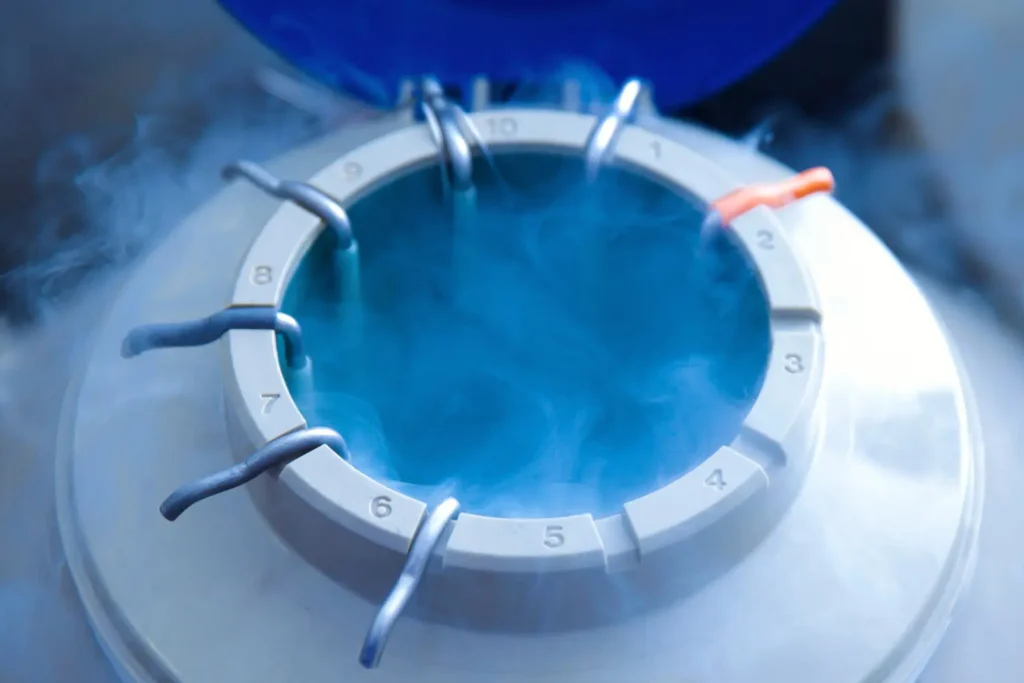
When stem cells are collected for a therapeutic procedure, there is an opportunity to preserve additional biological material for potential future use. Stem cell banking allows patients to store their own stem cells — collected at their current biological age — for potential future therapeutic applications.
The biological case for banking is straightforward. Stem cell quality and quantity decline with age. The cells available today are biologically younger and more viable than those that could be collected five or ten years from now. For a patient already undergoing a bone marrow aspiration or adipose tissue collection for a knee procedure, banking the additional material requires no separate collection procedure.
This is not a required part of knee pain treatment at NeoMedicine Institute. It is a proactive option worth understanding before the collection procedure takes place. Learn more about why banking now matters.
Who Performs Stem Cell Therapy for Knee Pain at NeoMedicine Institute
At NeoMedicine Institute, every stem cell therapy evaluation and procedure for knee pain is performed personally by Dr. Carlos De La Hoz, MD.
Dr. Carlos De La Hoz is triple board-certified:
- American Board of Anesthesiology (2013) — providing deep pharmacological training, procedural precision, and real-time clinical judgment during interventional procedures
- American Board of Pain Medicine (2020) — providing clinical training in the evaluation and treatment of chronic joint pain, imaging-guided injection techniques, and the intersection of pain medicine with regenerative care
- American Board of Regenerative Medicine (2021) — providing specific clinical training in stem cell therapy, platelet-rich plasma therapy, and the biological mechanisms of tissue repair and cellular regeneration
This combination of board certifications is rare among regenerative medicine providers in Miami. Most clinics offering stem cell therapy for knee pain are led by physicians with a single board certification. Dr. Carlos De La Hoz’s triple certification reflects training that directly spans the disciplines required to evaluate, perform, and coordinate stem cell therapy for complex knee conditions — from imaging review and procedural delivery to post-treatment assessment and longitudinal follow-up.
NeoMedicine Institute serves patients from across Miami-Dade and Broward County seeking stem cell therapy for knee pain — including patients from Doral, Aventura, Coral Gables, Brickell, Miami Beach, Kendall, Hialeah, Sunny Isles Beach, Bal Harbour, Hallandale Beach, Pembroke Pines, and Weston.

PRP vs Stem Cell Therapy for Knee Pain — How the Decision Is Made
Patients researching knee pain treatment in Miami frequently encounter both PRP therapy and stem cell therapy as options. Understanding how the two differ — and how the decision between them is made — helps patients have more informed conversations with their physician.
PRP therapy concentrates growth factors from the patient’s own blood and delivers them to the knee joint to support the tissue healing environment. It is generally evaluated as a first-line regenerative option for earlier stages of knee osteoarthritis or acute soft tissue injuries where the joint retains significant biological activity.
Stem cell therapy introduces the patient’s own regenerative cellular material into the joint environment. It is generally evaluated when the clinical picture calls for a more intensive regenerative approach — more advanced joint degeneration, larger structural damage, or cases where PRP alone has not produced adequate clinical response.
In some cases, PRP and stem cell therapy may be evaluated as part of a coordinated treatment plan. The sequence and combination of approaches is determined entirely through physician evaluation at NeoMedicine Institute — never as a preset package.
Frequently Asked Questions — Stem Cell Therapy for Knee Pain Miami
Clinical research suggests stem cell therapy may support pain reduction and functional improvement in patients with knee osteoarthritis and other knee conditions where the joint retains biological activity. Multiple peer-reviewed trials have reported meaningful improvements in pain and function following autologous stem cell treatment. Results vary between patients and stem cell therapy is not appropriate for every knee condition or every stage of joint degeneration. Candidacy is determined through physician evaluation at NeoMedicine Institute including imaging review and clinical assessment.
At NeoMedicine Institute, stem cell therapy for knee pain uses only the patient’s own biological material — collected from peripheral blood, bone marrow aspirate concentrate (BMAC), or adipose tissue. No donor-derived material is used. The collection method Dr. Carlos De La Hoz recommends reflects the individual patient’s clinical findings and what the imaging and joint assessment support.
Stem cell therapy and surgery serve different clinical purposes and are appropriate for different stages and types of knee conditions. Stem cell therapy is generally evaluated for patients who want to explore non-surgical options, who are not yet surgical candidates, or whose knee condition may respond to regenerative intervention. Surgery remains the most appropriate option for certain advanced conditions. At NeoMedicine Institute, Dr. Carlos De La Hoz evaluates each patient’s imaging, health history, and clinical findings to determine which approach is most appropriate for that specific patient.
The number of sessions is determined through physician evaluation between each treatment and is never predetermined at the start of care. At NeoMedicine Institute, additional sessions are only recommended when the clinical assessment indicates a basis for continuing. Patients are never prescribed a package of sessions in advance of any physician evaluation of their response to treatment.
Yes — for patients undergoing bone marrow or adipose tissue collection for a knee procedure, stem cell banking may be discussed as part of the same appointment. Banking preserves biologically younger cells collected today for potential future therapeutic use without requiring a separate collection procedure. This option is worth discussing with Dr. Carlos De La Hoz during the initial evaluation.
Stem cell therapy for knee pain is generally not covered by health insurance as it is classified as regenerative or investigational for most orthopedic indications. Patients are encouraged to contact NeoMedicine Institute directly to discuss pricing and payment options based on their individual treatment plan.
Stem cell therapy for knee pain is available at NeoMedicine Institute’s Doral clinic at 2510 NW 97th Ave, Suite 110, Doral FL 33172 and the Aventura clinic at 2820 NE 214th St, Suite 801, Aventura FL 33180. NeoMedicine Institute serves patients across Miami-Dade and Broward County including Coral Gables, Brickell, Miami Beach, Kendall, Hialeah, Sunny Isles Beach, Hallandale Beach, and Pembroke Pines. No referral is required and both locations are accepting new patients.
Schedule a Knee Pain Evaluation at NeoMedicine Institute
Knee pain that has not responded to physical therapy, cortisone injections, or conservative care deserves a physician evaluation before surgery is considered as the only remaining option. At NeoMedicine Institute, Dr. Carlos De La Hoz, MD reviews imaging, evaluates the joint, and builds an individualized plan that reflects what your specific knee condition and biology actually support.
No referral required. Locations in Doral and Aventura, FL. Serving patients across Miami-Dade and Broward County.